Getting Your First Brand Deal With Under 5,000 Followers: A No-BS Guide
How nano-influencers in Australia are landing real paid brand deals in 2026 — what the numbers actually say, the two paths that work, and what to demand from day one.
By Donkey Donna, edited by Dr Brent Coker

Yes — you can get paid brand deals with under 5,000 followers. The market actually wants you. The hard part isn’t whether brands are willing; it’s knowing where to look, what to charge, and which protections to demand before you start filming.
This post is the honest version. No “manifest your dream brand” energy. Just what’s working in Australia right now, the two paths that actually land deals, and the platform mechanics that decide whether you get paid in 14 days or chase an invoice for three months.
Why are brands actively chasing nano-influencers in 2026?
Because the numbers stopped supporting macro deals years ago, and the budget has finally caught up. Australian influencer ad spend reached US$590 million in 2026, up 13.5% year-on-year, and the largest growth bucket isn’t celebrity creators — it’s nano and micro. (Sociallypowerful, 2026)
Here’s the engagement maths that drives it:
- Nano (under 5k followers): 4–8% average engagement, peaking around 10.3% on TikTok in Australia
- Micro (5k–30k): 2–4%
- Mid-tier (30k–500k): 1.2–2%
- Macro (500k+): 0.5–1.5%
Source: Influencer Marketing Hub Benchmark Report 2026 and AU agency data via Sociallypowerful.
A brand with a $10,000 budget can buy one mid-tier post that maybe 1.5% of followers actually engage with, or 30 nano posts where 5% of each audience does. That’s not a marginal difference — that’s an order of magnitude more genuine attention for the same spend.
Here’s the part that doesn’t make it into most of those “how to get brand deals” posts: this isn’t a feel-good pivot. It’s the conclusion brands reached after they ran the numbers. The Australian beverage brand ALBA used a “mass-micro” deployment of 30 nano-influencers and went from obscurity to a fan-favourite summer drink in three months — driving a 75% lift in positive brand sentiment with not a single celebrity in the mix. (Sticki Case Studies)
You’re not pitching from weakness. You’re sitting on the asset brands are now actively buying. (For the broader thesis on why creator-side income is restructuring this way, see our micro-influencer monetisation guide.)
Where do you sit on the engagement-rate scale?
Before you pitch or apply, get clear on your real engagement rate — it’s the only number a brand cares about.
Quick maths: (average likes + comments per post) ÷ followers × 100.
If you sit below 3% on Instagram or 5% on TikTok, fix that first — brands assume low engagement means fake followers. Our companion piece on profile optimisation for brand deals covers the prep work in detail.
The two paths to a first paid deal (and why one is faster)
There are exactly two ways to land your first paid brand deal as a nano creator. Most blogs blur them. Don’t.
| The pitching path | The platform path | |
|---|---|---|
| Where deals come from | You research brands, write personalised outreach, send DMs and emails | Brands post paid campaigns; you browse and apply |
| Typical first-yes timeline | 50+ pitches, 3–6 months of consistent outreach | 3–6 weeks if your profile is dialled in |
| Effort per deal | High — every pitch is custom | Low — apply in 60 seconds |
| Pay certainty | Negotiated, sometimes ghosted, often delayed | Fixed-rate, payment held in escrow before you start |
| Reach ceiling | Limited to brands you can find and contact | Limited to whoever’s currently running campaigns |
| Builds your skill | You learn pitching, follow-up, negotiation | You learn the deliverable side faster |
The pitching path is the classic advice — it works, it’s just slow and high-rejection. The platform path is what didn’t really exist for nano creators until the last couple of years, because most marketplaces gated entry at 10,000 followers. The good ones now don’t.
You can run both at the same time. Most of the creators we work with do, with the platform path covering rent and the pitching path landing the dream-brand collaborations.
What does the platform path actually look like?
This is the part most “brand deals for small creators” posts skip — they tell you to use platforms but don’t show you what the experience looks like. Here’s a walk-through.
You sign up, verify your social accounts, and you land on a feed of paid campaigns you can apply to.
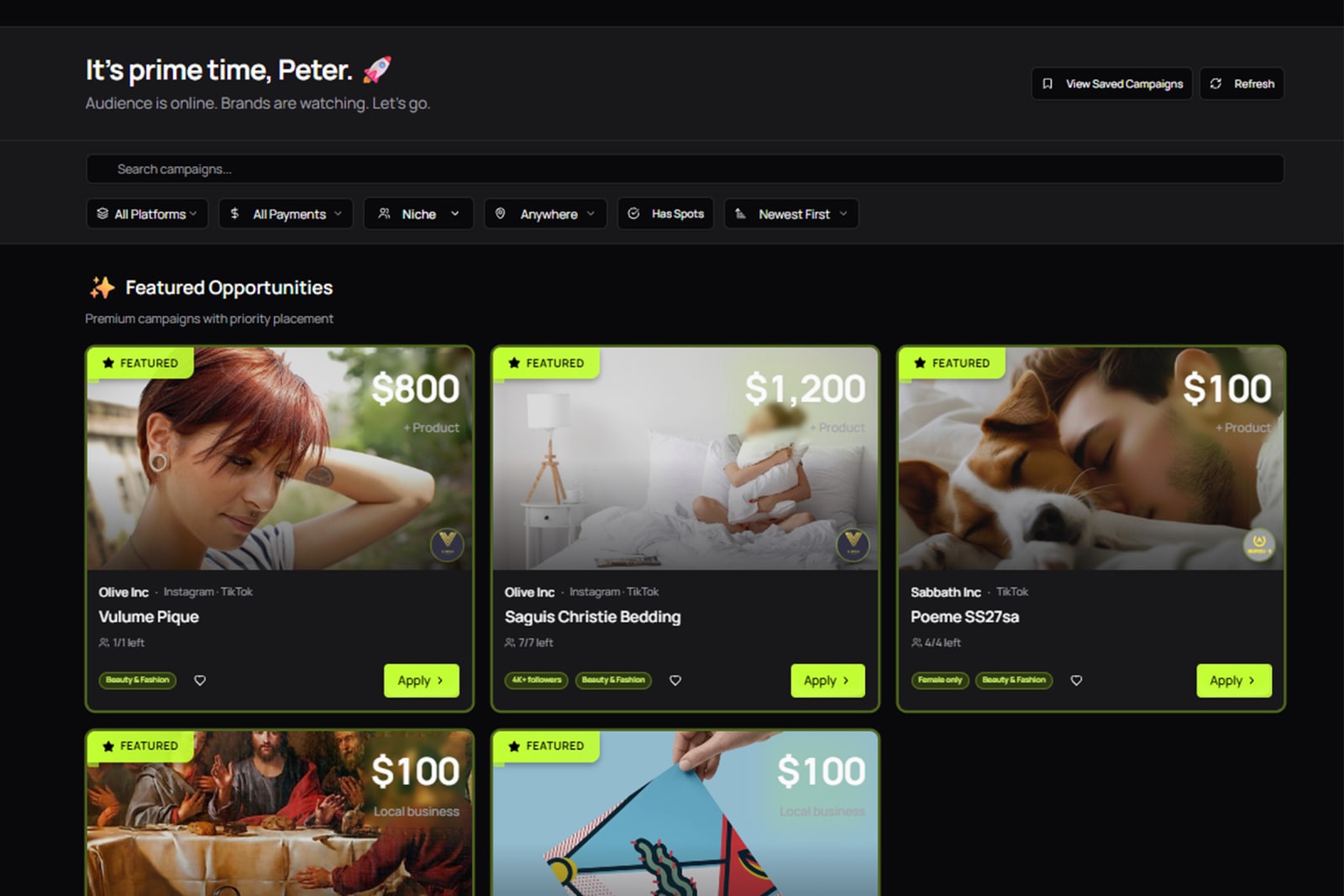
Each campaign tile shows the brand, the rate, the brief, the deliverables and the deadline. The rate is fixed and visible before you apply — no DM negotiation, no “what’s your rate?” anxiety, no awkward back-and-forth. If you like the rate and the brief fits your audience, you tap apply.
The brand reviews applications and accepts the creators they want. The moment you’re accepted, the brand’s payment is charged and held in escrow:
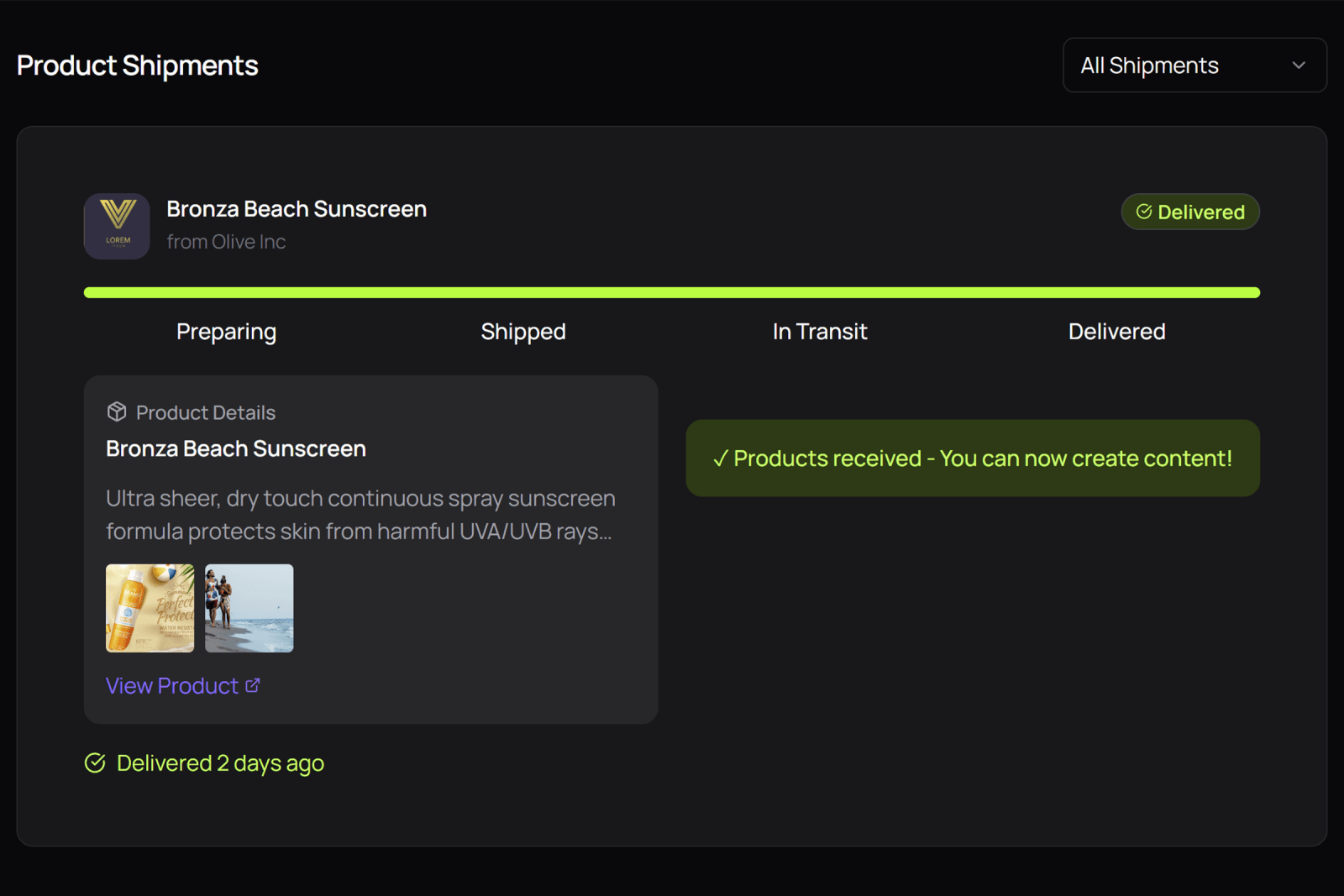
The money exists before you film. That’s the single most important sentence in this post. You’re not gambling that a brand will pay after the fact — the cash is already locked.
You produce the content per the brief, submit it for review, the brand can request one revision (not unlimited rounds — see protections below), you publish, and payment auto-releases. End to end on a Mega Donkey campaign, you’re typically paid within two weeks of post going live, often faster.
That’s the loop. Find. Apply. Get accepted. Create. Submit. Get paid.
What if you want to do the pitching path too?
Do both. The pitching path is slower but it’s how you build the long-term relationships and the dream-brand portfolio. Three rules that move the needle:
- Pitch brands already working with creators in your tier. If a brand has paid micro-influencers in the past 90 days, they have budget and a process. If they’ve only worked with macro celebrities, you’re a budget mismatch — skip them.
- Lead with the one thing they buy. Not your follower count. Your engagement rate, the demographic match between your audience and their customer, and one example of similar content you’ve already made. Three lines, not three paragraphs.
- Follow up exactly twice. Day three, day ten. After that, move on. Brands who’ll work with you respond; brands who won’t, won’t, and chasing them harder doesn’t move the needle.
A typical good cold pitch looks like this:
Hi [name], I’m a 3,200-follower TikTok creator focused on Australian working-mum recipes — last six videos averaged 7.4% engagement, mostly women 28–42 in metro AU. I noticed you’ve worked with creators in the parenting space (loved [specific past campaign]). I’ve made [link to similar content] and would love a paid post for [specific product]. My rate for a single in-feed Reel is $250 AUD. — [Name]
Notice what’s not in there: follower count as the headline, “I love your brand”, any mention of “exposure”, or any vagueness about money.
What should you actually charge?
The Australian nano-influencer market in 2026:
- Single in-feed Instagram post or short-form video (TikTok/Reel): $100–$500 AUD
- UGC where the brand owns the rights to repurpose: $150–$350 AUD per asset
- Story package (3–5 frames): $80–$200 AUD
- Whitelisting/dark posting (brand runs paid ads through your handle): add 50–100% on top of the base rate (InfluenceFlow Pricing Benchmarks 2026)
Within those bands, two things move you up: a high engagement rate (anything above 6% justifies the top of the band) and a tightly defined niche (a 4,000-follower fitness creator gets paid more than a 4,000-follower general-lifestyle creator, every time).
Don’t quote off vibes. The PostWorth calculator takes your real numbers — followers, engagement, niche, content type — and gives you a rate range you can defend in writing.
The single biggest mistake nano creators make is undercharging on the first deal “to get started”, then never managing to raise their rate. Set your rate at the bottom of the appropriate band on day one, not 50% below it.
Which protections should you demand from day one?
Nano creators get exploited because they don’t yet have the weight to push back. The fix is to only work where the platform pushes back for you. Look for these baked in:
- Payment held in escrow before you create — the only meaningful protection against ghosting. If the money isn’t locked, you’re working on credit.
- A one-revision limit — brands get exactly one round of structured feedback. No “just one more tweak” loop that turns a $200 deal into 12 hours of unpaid editing.
- No spec work — you get accepted before you create, not after. Don’t make content on the off-chance a brand likes it. That’s free labour with a “maybe” attached.
- Capped usage rights — the deliverable is for organic posting on your own channels. If a brand wants to run paid ads off your handle or repurpose your content forever, that’s a separate, paid line item. (Standard usage-right benchmarks)
- A real dispute process — if something goes wrong, there should be someone other than the brand making the call. Frozen funds, evidence on both sides, a defined SLA.
- AANA-aligned disclosure baked in — Australian campaigns must include
#ador equivalent. A platform that ignores this is one ACCC complaint away from a problem you don’t want your name attached to.
We built each of these into Mega Donkey because we got tired of watching nano creators do everything right and still get burned. They’re not “nice to have” — they’re the difference between sustainable creator income and a series of expensive lessons. Full breakdown: what every creator should demand from an influencer platform.
How long should it actually take?
If your profile is in good shape and you’re applying to two or three campaigns a week on a platform that doesn’t gate at 10k followers, three to six weeks is the usual range to a first paid deal. Cold pitching takes longer — Reddit’s r/influencermarketing community pegs the typical timeline at 50+ pitches before the first paid yes.
If you’ve been at it for two months on a marketplace and have nothing, the issue is almost always one of three things:
- Engagement rate is too low — fix the content before you fix the strategy.
- Niche is too broad — “lifestyle” is not a niche; “Brisbane working-mum recipes under 20 minutes” is.
- Profile reads as casual — no pinned work, no clear bio, no recent posts.
If the platform itself has fewer than a couple of new campaigns posted weekly, that’s the bottleneck, not you.
Frequently asked questions
Can I really get brand deals with under 5,000 followers?
Yes. Australian influencer ad spend hit US$590 million in 2026, up 13.5% year-on-year, and most of the new dollars are flowing to nano and micro creators. Engagement rate matters more than follower count — nano accounts (under 5k) typically run 4–8% engagement vs. under 1% for macro accounts. Brands have done the maths and are actively choosing smaller, more engaged creators.
What engagement rate do I actually need to get a brand deal?
Aim for at least 3% on Instagram and 5% on TikTok. Nano-influencer averages sit around 4–8% on Instagram and as high as 10.3% on TikTok in Australia. If you’re below those bands, your first job is fixing engagement before you start pitching.
How much should I charge for my first paid post?
The Australian market for nano creators (under 5k followers) typically sits between AUD $100–$500 for a single in-feed post or short-form video, and $150–$350 for UGC where the brand owns the rights. Use the PostWorth calculator to sanity-check your number against your real engagement and niche before you quote.
Do I need an ABN before I take a paid brand deal?
Not for your very first one. The ATO uses a hobby-vs-business test, and casual one-off income usually qualifies as hobby income. Once you’re earning regularly with the intent to make a profit, you need an ABN. GST registration is only required once your annual turnover hits $75,000 AUD. The full version is in our companion piece below.
How long does it usually take to land a first paid deal?
If your profile is dialled in (clear niche, strong engagement, two or three pinned examples of your best work), three to six weeks is realistic on a marketplace. Cold pitching takes longer — most outreach guides quote 50+ pitches before a first paid yes, which is months of work for someone with a day job.
What’s the difference between gifting, UGC and a paid brand deal?
Gifting is product-only — you receive the product, you make content, no cash. UGC is paid content production where the brand owns the rights to use the content in their own ads. A traditional paid brand deal is when you post to your own audience for a fee. UGC pays better for nano creators because brands aren’t buying your reach, they’re buying your filmmaking.
Related reading
- How to value what your content is actually worth before you pitch — the PostWorth calculator and the maths behind nano rates
- Profile optimisation for brand deals — what to fix before you apply for anything
- The micro-influencer’s guide to monetising on TikTok and Instagram — the bigger picture on creator income in 2026
Ready to apply for your first paid campaign?
Brands are posting paid campaigns for nano creators every week. No follower minimum above 1,000, no negotiation, no chasing invoices — payment is held in escrow before you make a single piece of content.
Sign up to Mega Donkey as a creator — it takes about four minutes, and you can be applying to your first campaign today.
Ready to get started?
Launch your first campaign or join as a creator today.