Trust Is Getting Harder: The 2026 Brand Playbook for Authentic Influencer Marketing
Consumer trust in influencer marketing is cracking. Here's the 2026 data on what's breaking it — and the playbook brands are using to rebuild it.
By Donkey Dan, edited by Dr Brent Coker

If you ask a brand marketer what’s keeping them up at night in 2026, you’ll get one of two answers: “I can’t prove it worked” or “I’m not sure the audience believes it.” The first is a measurement problem — we’ve written about that in our guide to multi-touch attribution. This post is about the second one, and it’s getting worse.
Audience trust in sponsored creator content is cracking in measurable ways. Roughly one in four consumers now says they don’t trust influencers at all — a higher distrust rate than for general advertising. Gen Z is quietly tuning out. Regulators are handing down first-of-their-kind fines. And AI-generated creator content, the thing that was supposed to scale marketing, is pushing audiences in the opposite direction.
Here’s what’s actually breaking trust in 2026, and the five-move playbook brands are using to rebuild it.
Is consumer trust in influencer marketing actually dropping?
Yes, and the numbers are more blunt than the industry usually admits.
A February 2025 survey of 3,720 consumers by BBB National Programs found that 26% of consumers report they don’t trust influencers at all — compared to just 11% who feel that way about general advertising. Think about that for a second: the format built on relatability is now less trusted than the thing it was designed to replace.
Australian audiences are showing the same pattern with a local accent:
- 44% of Australian consumers say transparency is essential for them to trust a recommendation.
- 34% of Australian Gen Z say they disengage from overused or heavily scripted influencer partnerships.
- A 2025 Snapchat study of more than 3,000 Australians aged 18–24 found Gen Z now prefers friends over influencers as their primary source of shopping inspiration.
- 80% of consumers globally cite “lack of genuineness” as the single biggest reason they distrust a creator.
This isn’t influencer marketing collapsing. Spend is still up — 74% of Australian marketers are increasing influencer budgets. It’s that the wrong kind of influencer marketing is collapsing, and the signals are loud enough that your CFO is starting to notice.
What’s actually breaking audience trust in 2026?
Three things, in roughly this order of damage:
- Undisclosed or poorly disclosed sponsorships — still the single biggest trust killer, and now being fined.
- AI-generated and synthetic creator content — audiences can’t always spot it individually, but in aggregate the feed starts feeling hollow.
- Celebrity and macro partnerships that feel transactional — the glossy one-off post reads as an ad even when it’s technically compliant.

Fixing the first is the fastest trust lift you can make. Let’s start there.
How are undisclosed sponsorships hurting Australian brands right now?
This is the one that’s changed most in the last 12 months. Australia has moved from “please disclose” to “disclose or pay.”
Section 2.7 of the AANA Code of Ethics requires that advertising be clearly distinguishable as advertising. For creator content, that means a disclosure has to be obvious and upfront — not a buried #ad after 14 other hashtags, not a pastel “paid partnership” watermark you have to squint for. Ad Standards has upheld complaints on exactly this basis in 2025 and 2026, including a June 4, 2025 ruling on an event-invite post that the creator had captioned “not an ad,” and a March 12, 2026 ruling on a TikTok beverage post that lacked clear paid-collaboration disclosure.
Then there’s the money. In March 2026, the ACCC handed down Australia’s first financial penalty for undisclosed influencer sponsorships — Tomsem Consolidated (PhotobookShop) was fined AU$39,600 after a whistleblower reported the company had instructed 107 influencers to review free products on Instagram without disclosing the commercial relationship, over the period August 2024 to September 2025. Penalty aside, imagine the brand-safety conversation when that news lands on your Chief Marketing Officer’s desk.
Historical ACCC sweeps have found around 81% of 118 audited influencers potentially non-compliant with disclosure requirements — and Ad Standards received more than 5,200 complaints in 2025 alone. The regulator is no longer asleep; the industry was.
Here’s the counterintuitive part, and the reason you shouldn’t treat disclosure as a compliance tax: campaigns with clear, visible disclosure outperform campaigns with hidden or absent disclosure by 12% on engagement and 18% on conversion. Audiences aren’t angry that something is sponsored. They’re angry when you pretend it isn’t.

The fix is operational, not creative. Make disclosure a contract term, not a polite request. Use platform-native tools (Instagram’s Paid Partnership tag, TikTok’s branded-content toggle) plus caption-level disclosure — and monitor compliance post-publication. Roughly 34% of creators still don’t use the native platform tools when they’re available, and that’s your real exposure, not a one-off bad actor.
Why does AI-generated creator content backfire in 2026?
Because audiences have quietly decided they don’t want it. Not all at once, and not always consciously — but the data is moving in one direction only.
- Just 26% of consumers now say they prefer AI-generated creator content to human-made content, down from 60% in 2023 (archive.com, 2025–26).
- 32% of US and UK consumers say AI is negatively disrupting the creator economy, up from 18% in 2023.
- 31% of consumers say they’re less likely to choose a brand they know uses AI in its advertising (CivicScience, July 2025).
- Virtual influencers score 42 out of 100 on consumer trust, versus 73 out of 100 for human creators.
- 54% of Gen Z say they prefer no AI at all in creative work (August 2025).
- Brand partnerships with AI influencers fell 30% in the first eight months of 2025 versus 2024; 89% of surveyed marketers say they’ll avoid them in 2026.
The flagship case study is Coca-Cola’s AI holiday ads — 2024’s version was called “soulless” and “eerie,” the 2025 re-run drew “lifeless” — but the broader pattern matters more than any single flop. When Meta rolled out automatic “Made with AI” labels via C2PA metadata, and TikTok enforced mandatory “AI-generated” watermarks from January 2026, those labels effectively became a brand-safety flag in the feed.
Here’s the uncomfortable finding: audiences are only about 49–52% accurate at identifying AI-generated images individually — basically a coin flip. But in aggregate, a feed thick with synthetic content feels off. People can’t name it, but they scroll past faster and they buy less. If your strategy relies on audiences not noticing, you’re betting against the only metric that matters.
The practical rule for 2026: if you’re using AI in production, disclose it at least as aggressively as you disclose the sponsorship — and keep the human in front of the camera. AI for editing, scripting support, subtitle generation: fine. AI as the creator itself: you’re paying a trust tax the platform is about to charge you for.
Why do celebrity and macro partnerships feel transactional now?
Because they almost always are transactional, and audiences got better at spotting the difference.
The shift to long-term, smaller partnerships is no longer a theory — it’s showing up in the numbers:
- Long-term creator partnerships generate 70% higher engagement than one-off sponsored posts.
- Brands running consistent influencer programs are reporting 130% year-on-year ROI increases, with ambassador structures delivering the highest ROI of any influencer strategy type.
- Micro-influencers (1K–100K followers) run 7–20% engagement rates against macro’s 3–6%, and a Stack Influence study pegged micro conversion at about 20% higher than macro per dollar spent.
- 61% of Americans (and a comparable figure in Australia) say “people like me” are their most credible product information source — not celebrities.
- In recent industry surveys, follower count ranked as the least important factor for creator selection. Brand suitability is now the top criterion.
The two Australian case studies worth stealing from:
- Frank Body built the #thefrankeffect UGC loop instead of chasing celebrity endorsements — it generated over 350,000 Instagram mentions and delivered continuous authentic social proof at a fraction of a celebrity fee.
- Tourism Australia replaced the celebrity tourism-ad formula with a roster of travel vloggers, photographers, and micro-influencers telling experiential stories. Audiences read it as a trusted peer recommendation, not a paid campaign.
This is the entire argument behind The Blanket Campaign Thesis in one sentence: 100 micro-influencers with 1,000 followers beats one influencer with 100,000 for trust, and the 2026 trust crisis is the moment that argument stops being theoretical.
What should brands actually do in 2026? The 5-move playbook
Here’s the short version of what’s working — the long version lives in every published post on this blog.
1. Make disclosure a contract term, not a polite request. Every creator contract should require platform-native disclosure tools plus caption-level disclosure, with a named penalty (content removal, payment clawback) for repeat non-compliance. The campaigns that do this convert better, not worse.
2. Vet for real engagement, not follower counts. A five-layer check — audience authenticity, geography match, engagement quality, brand-safety history, rate reasonableness — catches the 25% fake-follower problem before you’ve spent a dollar. Follower count is the least useful number on the profile; treat it that way.
3. Favour volume of authentic voices over celebrity concentration. Fifty micro-influencers at $300 each doesn’t just out-earn one macro at $15,000 on engagement and conversion. It also de-risks the brand-safety exposure: one creator going off-script is a conversation, not a crisis.
4. Build long-term partnerships — or use platform structure to simulate them. If you can’t run a 12-month ambassador program, run the same 30–50 creator bench across three campaigns a year. Audiences recognise repeat faces. Familiarity is the cheapest trust signal you’ve got.
5. Use creator content in paid media. UGC-style creative from a vetted, disclosed campaign is the single best-performing format on Meta and TikTok right now, precisely because it doesn’t look like a paid ad. Trust built in organic can be re-rented in paid at massive efficiency.

Trust as infrastructure, not just a creative brief
The thing brands keep missing in 2026 is that trust is no longer a vibe you set in the brief — it’s an operational layer you build once and run every campaign through.
On Mega Donkey, that layer is concrete. Every creator is ID-verified and engagement-audited before they can apply to a campaign. Our AI Safety Check scans submitted content for AANA disclosure compliance, tone-of-voice fit, and brand-safety risks before it goes live. The Trust Score gives you a single number on any creator that folds in audience authenticity, past campaign performance, and disclosure compliance history. Payments sit in escrow until the post is verified as published and correctly disclosed — which means the creator has a direct financial incentive to do disclosure right.
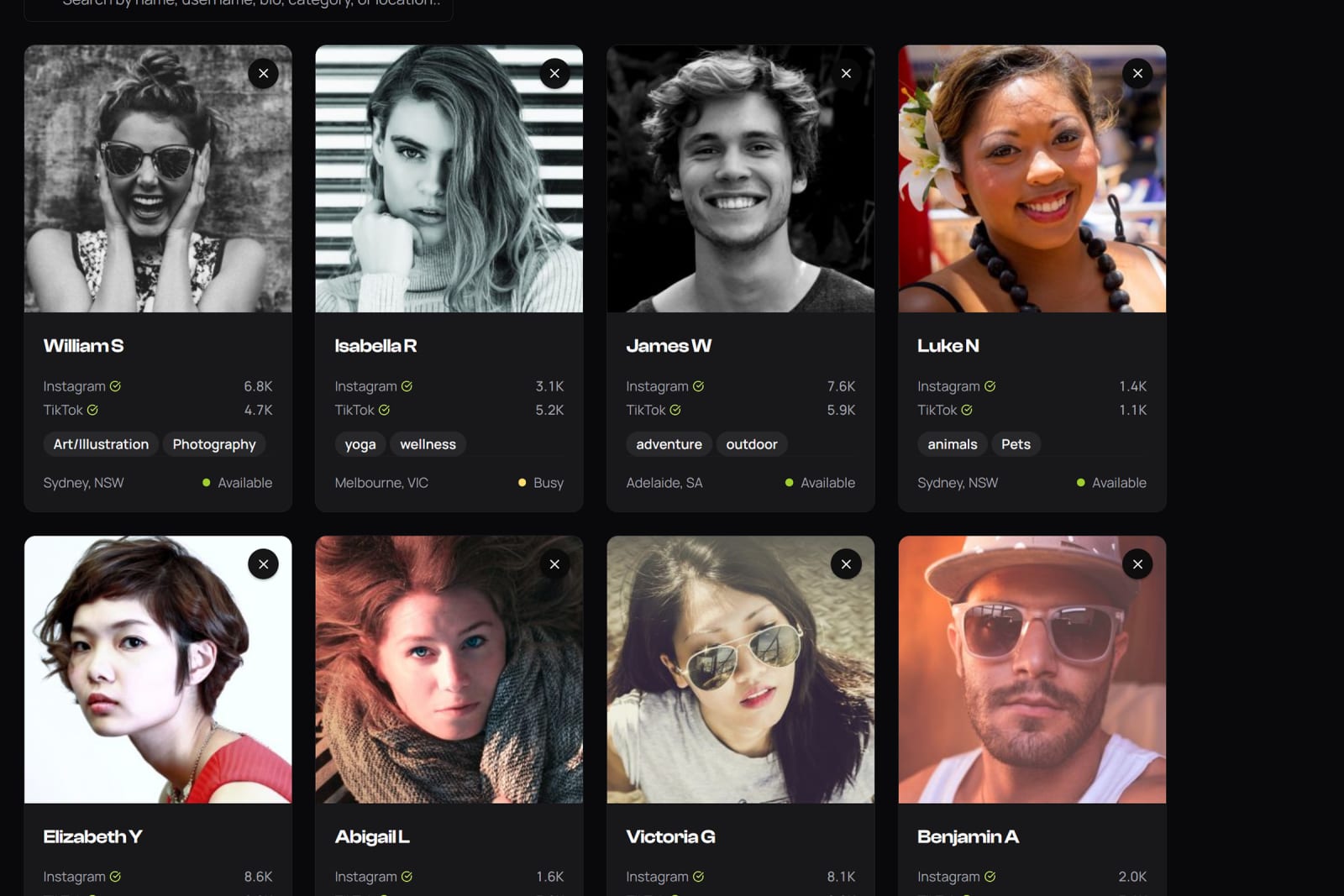
We didn’t build those features because we thought they’d look good in a pitch deck. We built them because we sat with the same two gripes every brand was voicing in 2025, and the second one — “I’m not sure the audience believes it” — turned out to be a product problem, not a marketing problem.
The TL;DR for 2026
- Consumer distrust of influencer content now outstrips distrust of general advertising. That’s new.
- Undisclosed sponsorships are the biggest active trust killer, and the ACCC is now fining them — PhotobookShop was the first, not the last.
- AI-generated creator content is being quietly rejected by audiences, including the Gen Z cohort it was built for.
- Long-term partnerships with vetted micro-influencers outperform celebrity and macro plays on engagement, conversion, and brand safety.
- Make trust operational: contracted disclosure, real vetting, creator volume over concentration, and platform infrastructure that enforces the rules so your brand team doesn’t have to.
If “I’m not sure the audience believes it” has started showing up in your own post-campaign meetings, it’s time to stop patching the symptoms and rebuild the plumbing.
Start a campaign with verified micro-influencers on Mega Donkey →
Where this fits in our pillar
This is one piece of our brand-safety playbook for influencer marketing — vetting, disclosure, and crisis response. The full pillar maps the 2026 brand-safety landscape end to end.
Keep reading:
- The Blanket Campaign Thesis: Why 100 Creators with 1,000 Followers Beat 1 with 100,000
- The Un-Influencer: Why the Most Valuable Voice in 2026 Is a Regular Person with 1,000 Followers
- Beyond Vanity Metrics: What Brand Managers Actually Need to Report
- Multi-Touch Attribution for Micro-Influencer Campaigns
- Why Your Shopify Store Needs 50 Micro-Influencers, Not 1 Celebrity
Ready to get started?
Launch your first campaign or join as a creator today.