Why Micro-Influencing Is on the Rise (And Why It's Not Slowing Down)
Micro-influencers are outperforming celebrities on engagement, conversions, and ROI. Here's what's driving the shift and which sectors benefit most.
By Donkey Dan, edited by Dr Brent Coker

Micro-influencers aren’t a trend. They’re a structural shift in how products get discovered and purchased — and the data backs it up. Creators with 1,000 to 10,000 followers now deliver engagement rates of 3.86% on Instagram (versus 1.21% for macro accounts), conversion rates nearly four times higher, and an ROI of $5–$6.50 (AUD) for every dollar invested. Year-over-year, brand collaborations with micro-influencers rose 33% in 2025. This isn’t a fad. It’s the new operating model.
If you’re a brand wondering whether to bet on a handful of big names or a roster of smaller creators, or a creator wondering whether your 3,000 followers actually matter — this one’s for you.
Why are micro-influencers suddenly everywhere?
The short answer: the algorithms changed, and consumer trust followed.
TikTok fundamentally rewrote the rules of content distribution by prioritising interest graphs over follower counts. A creator with 800 followers can land on millions of For You Pages if the content resonates. Instagram followed suit with Reels, shifting from a social graph (who you follow) to an interest graph (what you engage with) in late 2025. The result? Niche-focused creators saw 40–60% reach increases, while generic aggregator accounts lost 60–80% of theirs.
This isn’t subtle. It’s a platform-level decision to reward relevance over fame.
At the same time, audiences have developed a finely tuned radar for sponsored content from mega-influencers. When someone with 2 million followers holds up a product with a rehearsed smile, audiences pattern-match it as an ad instantly. Micro-creators still feel like peers recommending something — and that distinction is psychologically powerful.
The market reflects this. The global micro-influencer market hit $7.3 billion in North America alone in 2025, growing at 14.8% year-over-year, with a projected 16.2% compound annual growth rate through 2033. And 73% of brands now prefer micro and mid-tier partnerships over macro-influencer deals.
 The old playbook: celebrity endorsements that feel distant and rehearsed. Audiences have moved on.
What actually makes a creator influential?
Influence isn’t reach. It’s the ability to change behaviour.
A creator is influential when their audience trusts their judgment enough to act on it — buy something, try something, shift an opinion. That trust is built through three things:
-
Consistency of perspective. The audience knows what this person stands for. They show up with a recognisable point of view, not a rotating door of sponsored takes.
-
Perceived authenticity. The creator shares genuine experiences — including negative ones — not just paid endorsements. When someone documents their actual skincare journey over months, including the products that didn’t work, every positive recommendation carries weight.
-
Contextual authority. They have credible knowledge or lived experience in the domain they’re discussing. A fitness creator who trains five days a week and shares their real progress has more influence over supplement purchases than a lifestyle creator who posts a one-off sponsored gym reel.
Here’s the data behind this: research shows that credibility correlates with purchase decisions at r=0.773 — a remarkably strong relationship. And parasocial bonds (the one-sided emotional connection audiences build with creators they follow) make followers 32% more likely to buy recommended products.
A skincare creator with 3,000 followers who visibly documents their own skin journey has more influence over purchase decisions than a lifestyle creator with 500,000 followers who posts a one-off sponsored reel. Influence is domain-specific and earned over time, not conferred by a follower count. We’ve written more about this in why the most valuable voice in 2026 is a regular person with 1,000 followers.
Does having a massive following even matter anymore?
Yes — but less than it used to, and for fewer reasons than you’d think.
Large accounts still serve a purpose for brand awareness at scale, cultural moments, and lending legitimacy (a brand can say “as seen with [celebrity]”). But for driving actual conversions, the maths has shifted decisively.
| Metric | Micro-Influencers (1K–10K) | Macro-Influencers (100K+) |
|---|---|---|
| Instagram engagement rate | 3.86% | 1.21% |
| TikTok engagement rate | 4–8% | 0.5–2% |
| Conversion rate | 3.1% | 0.8% |
| Customer acquisition cost | $22.75 (AUD) | $67.40 (AUD) |
| Cost per engagement | ~$0.20 | ~$0.33 |
But it’s not just the numbers. The nature of engagement is different.
Comments on micro-creator posts tend to be genuine conversations — questions, shared experiences, tagging friends who’d find this useful. Comments on macro posts skew toward emoji reactions and generic praise. That conversational engagement is where purchase intent actually lives.
The other factor is structural. Platforms actively incentivise smaller creators. TikTok and Instagram both benefit from a deep bench of active creators, not a top-heavy celebrity ecosystem. As of late 2025, Instagram’s algorithm categorises accounts based on your last 9–12 posts and penalises inconsistent content themes. This rewards focused, niche creators — which micro-influencers inherently are.
We broke down the full data on this in beyond vanity metrics. The short version: follower count is a vanity metric. Engagement quality is the leading indicator.
 This is what authentic looks like — real people, real moments, real trust.
Why are brands choosing 50 small creators over 1 big name?
Several compounding reasons — and cost efficiency is only the beginning.
The maths works. A brand can engage 50 micro-creators for the price of one macro-influencer and get far more total content, more diverse audience segments, and better geographic targeting. Micro-influencers deliver $5–$6.50 in revenue for every dollar invested, outperforming traditional paid media and most macro partnerships.
The content works harder. Brands are increasingly using micro-influencer content not just for organic reach but as the raw material for their paid ad campaigns. Authentic-feeling content from relatable creators outperforms polished studio ads in conversion metrics — 93% of brands report that UGC outperforms traditional branded content. When ad creative fatigue sets in after 3–7 days on Meta (and it does, reliably), having a library of 50 unique creator perspectives means you’re never scrambling for fresh assets.
The risk is distributed. If one macro-influencer has a PR crisis or underperforms, you’ve lost your entire campaign budget. Spread across 30 micro-creators, one underperformer barely registers. In 2024, 43% of brands shifted budgets specifically toward smaller influencers for this kind of risk diversification.
The creators are better collaborators. Micro-creators tend to be more responsive, more willing to adjust messaging, and more genuinely engaged with the brand — because each partnership matters more to them. We see this constantly on our platform: creators with smaller followings consistently deliver content faster, hit brief requirements more accurately, and bring more creative energy to each campaign.
This is the blanket campaign thesis in practice: 100 real voices beat 1 loud one. And if you’re running a Shopify store, the case is even more specific.
Which industries see the biggest wins from micro-influencers?
Micro-influencers thrive wherever trust, personal experience, and niche expertise drive purchasing decisions. Some sectors stand out.
Beauty and skincare. The classic micro-influencer success story. “This actually worked on my skin” from someone who looks like a real person is incredibly compelling. Nano and micro-creators dominate beauty campaigns, with clean beauty seeing major earned media value growth in early 2025.
Food and beverage. Niche foodies with 10K–50K followers are redefining food marketing. A genuine reaction to a new product — filmed in someone’s actual kitchen — outperforms a polished studio ad every time. Australian brands have seen particularly strong results here; we covered this in depth in influencer marketing for food and bev brands.
Health, fitness, and wellness. When someone shows you their real training progress, their real meal prep, their real supplement routine — that’s persuasive in a way no billboard can match.
Parenting and baby products. Parents trust other parents. A creator documenting their genuine experience with a product their kid actually uses carries more weight than any celebrity endorsement.
Pet products. This one surprises people, but pet content is among the highest-engaging on social media. Micro-influencers in the pet space deliver engagement rates of 10–40%, making it one of the most effective niches for brand partnerships.
Fashion (mid-market and sustainable). Consumers are moving away from fast-fashion influencer culture. Everyday styling from someone with a wardrobe budget that looks like yours generates more clicks — and more sales — than aspirational content from someone wearing $10,000 outfits.
B2B and SaaS. The emerging frontier. Niche micro-influencers on LinkedIn or YouTube with 2,000–10,000 highly targeted followers in a specific profession (accounting, HR tech, developer tools) drive 3x more conversions than macro creators in B2B contexts.
The common thread: high-consideration purchases where the buyer wants social proof from someone they perceive as similar to themselves.
What’s really happening between influencers and their audiences?
This is where it gets genuinely interesting — and where most marketing articles stop short.
The influencer-consumer relationship is parasocial. The consumer feels they know the creator, but the creator doesn’t know them. That asymmetry creates a unique dynamic that doesn’t map neatly onto traditional advertising or even word-of-mouth.
Trust is provisional. Consumers grant influencers a kind of conditional credibility: “I trust you because you’ve been honest with me so far.” Every sponsored post either reinforces or erodes that trust depending on whether it feels congruent with the creator’s established identity. The creators who maintain trust long-term are selective about partnerships and transparent about sponsorships — paradoxically, saying “this is an ad” openly can increase trust rather than decrease it, because it signals honesty.
Trust transfers in one direction only. A creator can lend trust to a brand, but a brand cannot lend trust back to a creator. If a creator promotes something that disappoints the audience, the creator bears the reputational cost, not the brand. This is why the best micro-influencer programmes treat creators as partners rather than media channels — because creators who feel respected and fairly treated will protect the brand’s reputation as if it were their own. At Mega Donkey, this is exactly why we built escrow payments, one-revision limits, and fixed rates into the platform. It’s not just fairness — it’s good business.
Forty percent of consumers now prefer smaller creators. Not because they’re cheaper to work with, but because they feel more honest. Micro-influencers maintain closer relationships with their audience, and the content they produce reflects that intimacy. When a creator with 3,000 followers recommends a product, it reads like a friend’s recommendation. When a creator with 3 million followers recommends the same product, it reads like an advertisement — regardless of how genuine the endorsement actually is.
The macro trend is clear: consumer trust is migrating from institutions (brands, media, traditional advertising) toward individuals. But specifically toward individuals who feel accessible, honest, and similar to the consumer. Micro-influencers sit exactly at that intersection.
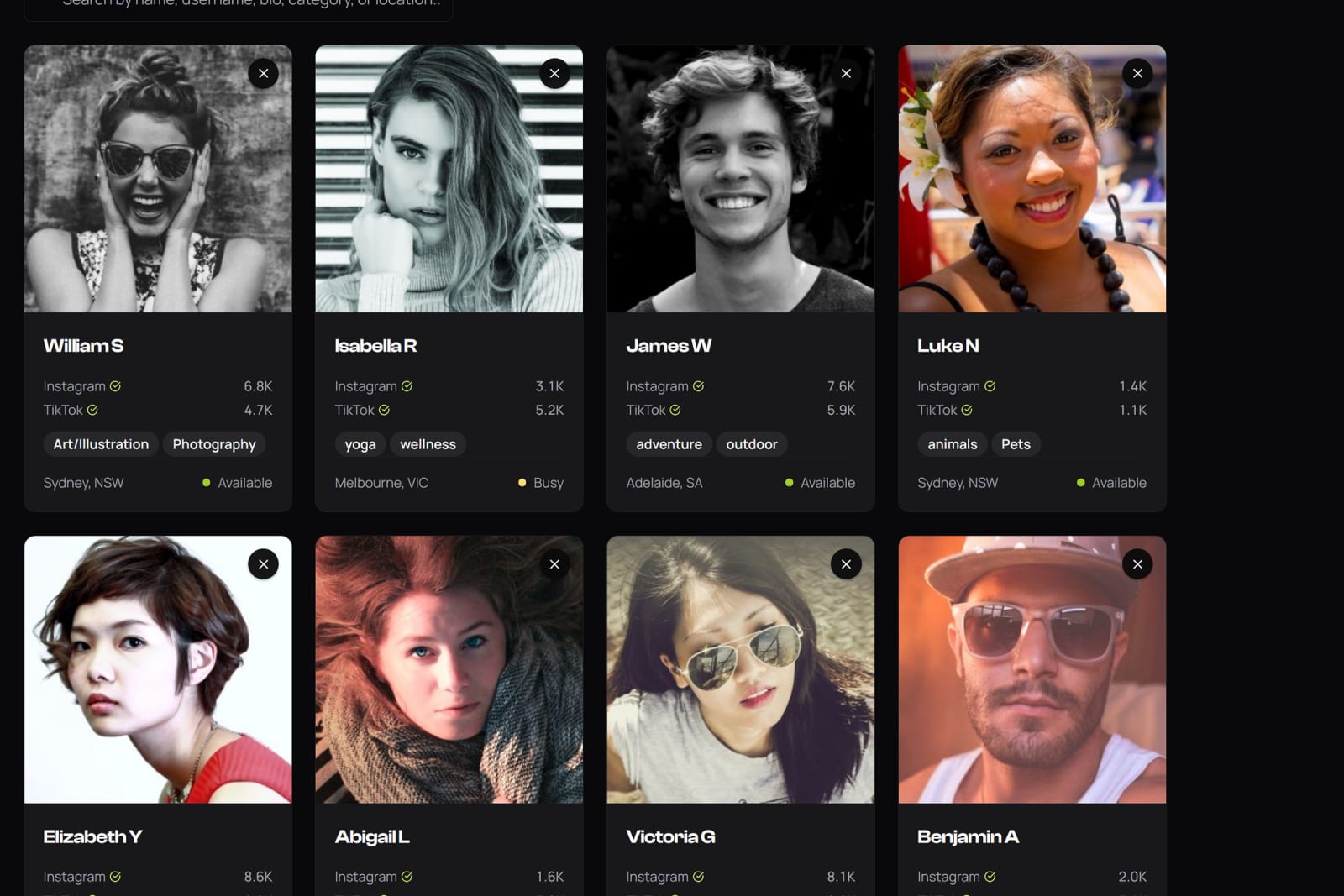 Mega Donkey’s creator discovery tool helps brands find verified micro-influencers who actually move the needle.
What does this mean for your next campaign?
This isn’t a passing trend. It’s a structural realignment of how influence works — driven by algorithmic changes, shifting consumer psychology, and hard ROI data that keeps tipping further in favour of smaller creators.
If you’re a brand, the play is clear: invest in a roster of authentic micro-creators, not a single expensive gamble. The engagement is higher, the content is more versatile, the risk is lower, and the maths works. If you want to see what that looks like in practice, start a campaign on Mega Donkey — we built the platform specifically for brands running campaigns with 50+ micro-influencers.
If you’re a creator, your small following isn’t a weakness — it’s your competitive advantage. The brands paying attention already know this. Your job is to double down on niche expertise, stay consistent, and make yourself easy to work with. The deals will follow.
Where this fits in our pillar
This piece is part of our pillar guide on scaling micro-influencer campaigns — covering creator volume, workflow, measurement, and brand-safety end to end. For the full playbook, start with the complete guide.
Ready to get started?
Launch your first campaign or join as a creator today.