Authentic Beats Polished: How to Keep Influencer Content Real in 2026 (Without Sacrificing Brand Safety)
Why audiences trust raw creator content over polished ads, the markers that separate real from staged, and a brief-level playbook for authenticity.
By Donkey Dan, edited by Dr Brent Coker

Influencer marketing only works when the audience believes the person behind the post. That belief is harder to earn in 2026 than it has been in any year before — and most of the reason is that brands keep spending money on content that looks like an ad.
The data is consistent. Eighty-eight percent of users say AI-generated content has weakened their trust in social media. Thirty-nine percent of Australians say AI in marketing makes them trust the brand less, and eighty-six percent now demand AI use be disclosed. Authentic creator content gets seventy-six percent more engagement than scripted versions, and unfiltered UGC converts roughly ten times better than brand or AI-produced content. Audiences aren’t reading captions. They’re reading sincerity.
This post is about how to make influencer content actually feel real — what separates authentic from polished or staged, the consumer psychology behind why one wins, and a brief-level playbook for protecting authenticity without giving up brand safety. We’ve already published the 2026 brand playbook for trust and the pillar piece on the two things a bigger budget can’t fix; this one is the tactical sibling. It’s the how.
Why Authenticity Is the Whole Game in 2026
Audiences haven’t become more discerning out of moral conviction. The shift is psychological, and the research has been catching up for years.
The Persuasion Knowledge Model is the cleanest explanation. When a viewer detects commercial intent — a script, a corporate tagline, a too-perfect frame — a mental alarm goes off. Skepticism kicks in. Purchase intent drops. The same product, recommended by the same person, performs measurably worse the moment the audience clocks it as an ad. Scripted macro-influencer promotions activate that alarm reliably; raw content from a creator who actually uses the product slips past it.
Then there’s parasocial relationship theory. Followers form genuine emotional bonds with creators they perceive as sincere — and a 2024 Nature paper found that perceived authenticity predicts the strength of those bonds more reliably than shared interests, content quality, or even how good-looking the creator is. Authenticity is the bond. Polish is decoration.
A 2025 Journal of Marketing study by Duffek and colleagues, drawing on 185 in-depth interviews, defines creator authenticity along five properties: expertise, connectedness, originality, transparency, and integrity. Misalignments between those properties destabilise trust — when a brand scripts a creator and squashes originality, audiences notice. The same study found transparency about AI use stabilises trust, even when AI is involved. Audiences don’t punish honesty. They punish concealment.
Layer on the IZEA 2024 data — seventy-seven percent of consumers prefer creator content to scripted ads, eighty-five percent trust influencers more than celebrities, and the Australian 2025 figures show fifty-three percent of Australians prefer creator content to professional marketing (rising to seventy percent among 18–29s) — and the picture is unambiguous. Authentic creator content isn’t a stylistic preference. It’s a structural advantage polished branded content cannot replicate.
 Authentic content looks like this — flour on the counter, a real laugh, no second take.
Authentic vs Polished: The Tells Audiences Are Reading
Audiences make the authentic-or-not call within the first second of watching. They aren’t analysing — they’re pattern-matching. Here’s what they’re matching against.
Visual tells
Authentic content reads as authentic because of imperfections. Natural light from a window or phone torch. A messy background. Slightly off-axis framing. Skin without filtering. Editing that’s choppy because it was done in CapCut on a Wednesday night, not three days in Premiere.
Polished content does the opposite. Ring-light symmetry. Colour grading. Smooth transitions. Backgrounds that match the brand’s palette. Skin smoothed past the point of credibility. None of that is bad in isolation — but when it’s wrapped around a creator endorsement, audiences read it as advertising, not recommendation.
Linguistic tells
Authentic captions and voiceovers run on how the creator actually talks. Emojis mid-sentence. “Lol.” “Tbh.” “Okay so.” Wildly varying sentence lengths. Slang specific to the creator’s corner of the internet. A 2025 study found drops in informal language, emoji use and personal voice are the single strongest engagement-rate predictor when a creator turns sponsored.
Scripted content reads as scripted. Repetitive phrasing. Generic praise (“absolutely loved this!”). Brand-approved adjectives. CTAs that sound like marketing-department language because they are.
Behavioural tells
Authentic delivery includes stutters, micro-pauses, mid-sentence corrections, and the small ways humans physically behave when they aren’t performing for a camera. Over-rehearsed delivery reads as over-rehearsed delivery. Gen Z scrolls past obvious AI content seventy-eight percent of the time, and spots rigid, perfectly-paced videos with the same speed.
Format tells
The authentic formats are the cheap ones. Phone-shot talking head. Behind-the-scenes of the creator’s actual life. Raw POV — phone in hand, doing the thing. Voice-over of actually using the product. Polished formats — studio sit-downs, multi-cam edits, B-roll cutaways, branded title cards — signal “media buy” before the content has registered.
 Polished studio content has its place — but not when you’re pretending it came from someone’s bedroom.
Platform and AI tells
TikTok rewards chaotic, personality-led, native-feeling content with 5–15 percent engagement on top performers. Instagram Reels rewards aesthetic polish a little more but still demotes scripted-feeling content (1–3 percent on sponsored). Australian Gen Z trust TikTok creators forty percent more than Instagram influencers — the platform’s native style is itself a trust signal.
AI giveaways are increasingly obvious to younger audiences: uncanny hands, inconsistent lighting and shadows, repetitive micro-expressions, motion that’s too smooth, generic vocabulary more formal than the creator’s actual voice, an absence of the specific quirks (verbal tics, running jokes, recurring hashtags) that mark a real person. We have a deeper take in the un-influencer thesis — short version: in a feed flooded with AI slop, a real human face is now a competitive moat.
The 5-Step Authenticity Playbook
Knowing what authenticity looks like is the easy part. Producing it at the scale of a 50-creator campaign — and doing it without trampling brand safety, AANA disclosure obligations or your legal team’s nerves — is the hard part. Here’s the playbook we run brands through.
Step 1 — Pick creators whose voice already sounds like the brand
The single biggest authenticity decision happens before the brief is written. If a creator’s voice doesn’t already vibe with your brand, no amount of clever briefing will make the content feel real. The point of an influencer endorsement is that someone whose audience already trusts them is recommending you — and audiences only believe it if it sounds like something the creator would say without you in the room.
The brands that get this right are picky about voice fit. Liquid Death partners with irreverent, anti-corporate creators because the brand itself is irreverent and anti-corporate. Tourism Australia’s most successful campaigns lean on non-traditional advocates with real ties to the country, not big names paid to fly in for a week. Vetting on this dimension means watching a creator’s last twenty posts, reading their comments, and checking whether their existing organic content already fits your category. We’ve built that into the platform — every Mega Donkey creator is verified, scored, and tagged for category-fit before they show up in search.
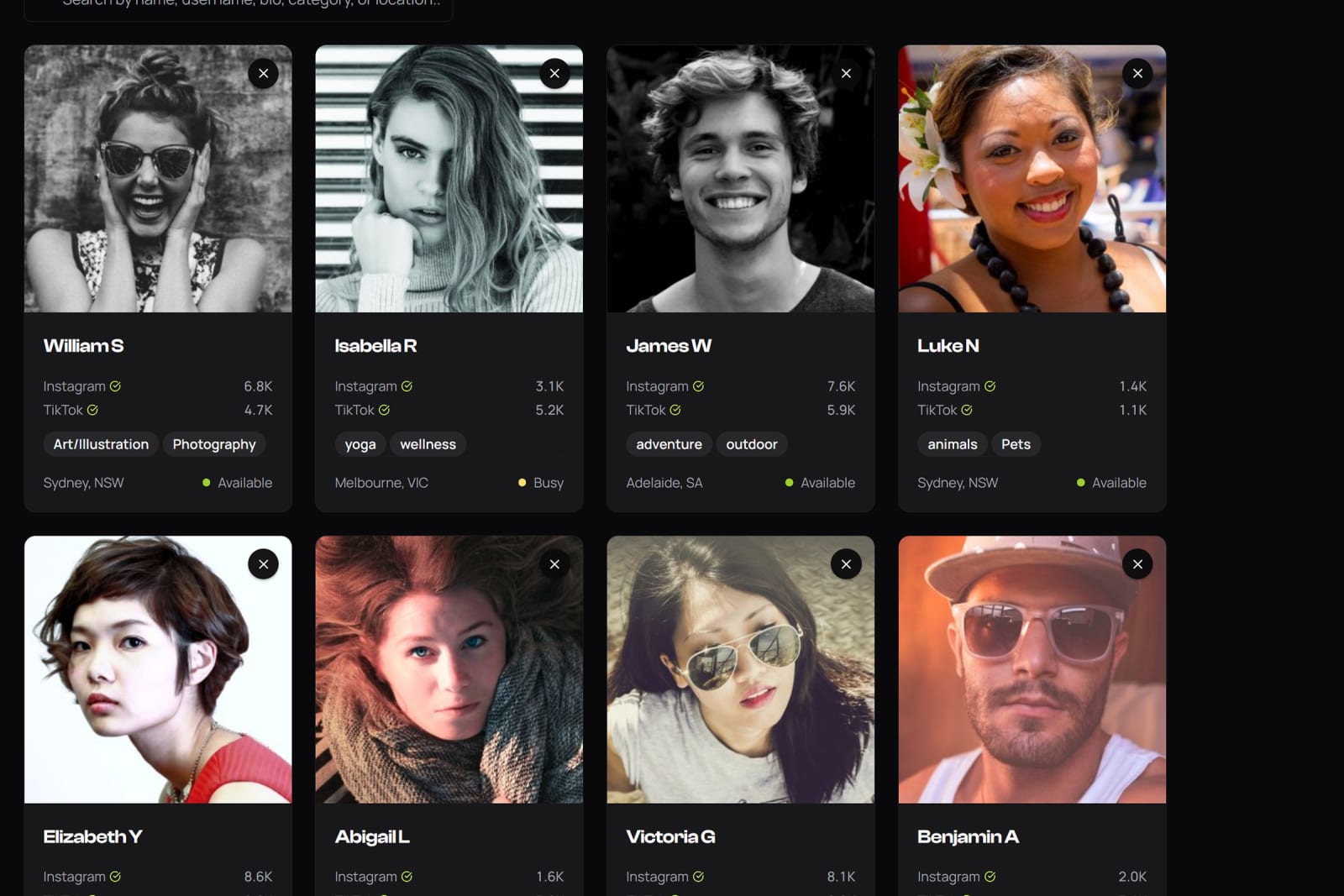 Vetted micro-creators with engagement and brand-fit signals built in.
Step 2 — Brief with guardrails, not scripts
The peer-reviewed evidence on this is clear. Wies, Bleier and Edeling (Journal of Marketing, 2023) found that creative latitude is the single biggest performance lever for creator content — over-scripted briefs measurably reduce engagement, especially when the audience doesn’t already know the brand. Cascio Rizzo and colleagues (Journal of Marketing, 2024) found that high-arousal language (“AMAZING!”, “OBSESSED!”) works for micro-influencers because audiences read it as enthusiasm, but backfires for macro-influencers because it reads as a sales pitch — meaning the same script applied across tiers will sabotage half your roster.
The fix is to brief on principles, not lines. A good 2026 brief covers:
- Who the audience is and what problem the product actually solves for them
- The 2–3 brand non-negotiables — claims you can’t make, words you can’t use, competitors you can’t reference
- AANA disclosure requirements in plain language (“#ad upfront, not buried, before any product mention”)
- The hook the creator needs to land (one sentence, not a script)
- The CTA (one line)
That’s it. The rest belongs to the creator. If you find yourself writing dialogue, you’ve crossed a line.
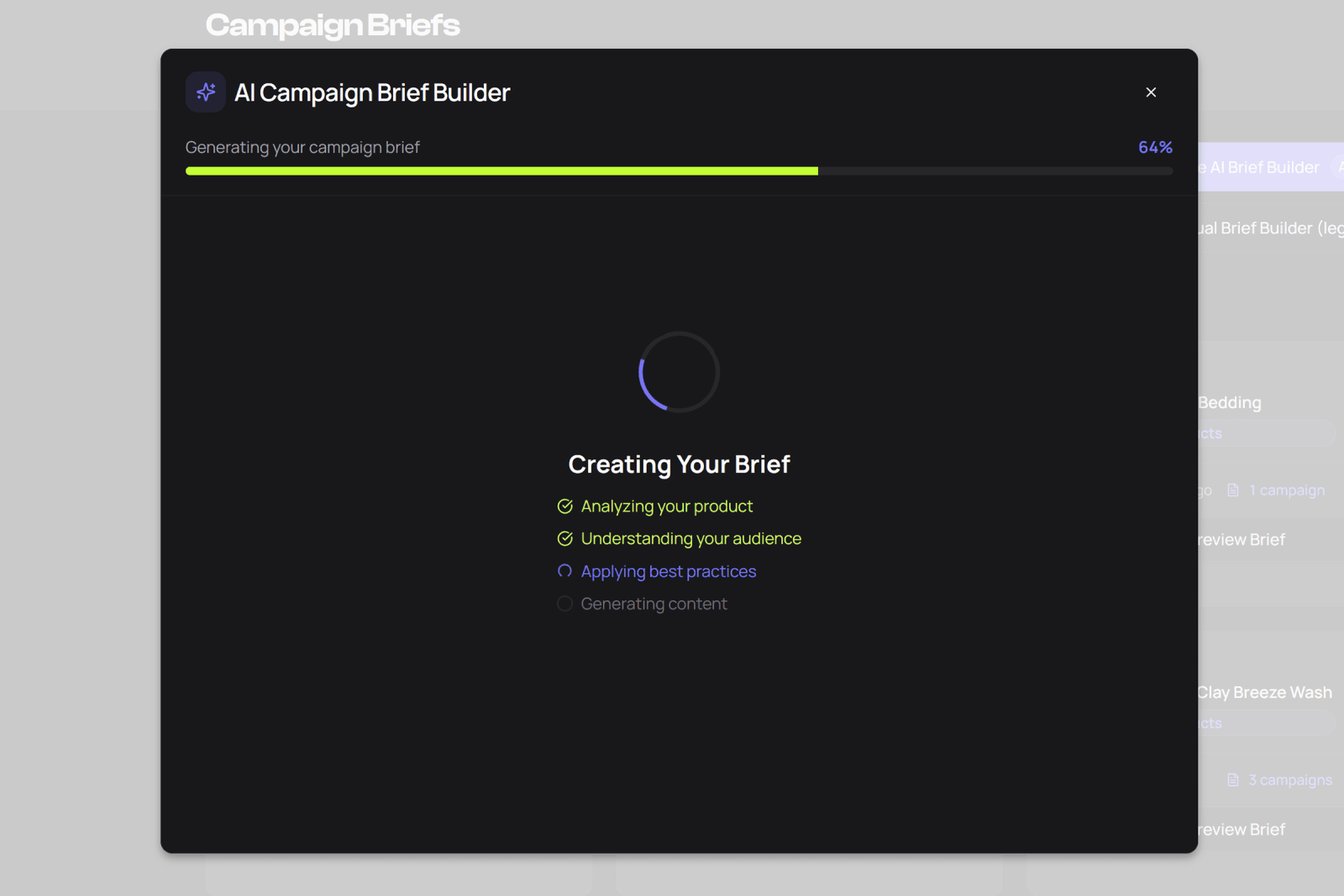 The AI Brief Builder writes briefs that protect the brand without scripting the creator.
Step 3 — Try uninstructed seeding before paid posts
The fastest way to know if a creator will produce authentic content for your brand is to send the product without any instructions and see what happens. Frank Body built one of the most-imitated creator programmes in Australia by seeding product to micro-creators with nothing more than a friendly note — the result was 100,000+ user-generated images under #letsbefrank, almost none of which were paid for, and most of which converted at rates branded ads couldn’t match.
Seeding at small scale isn’t a replacement for paid campaigns, but it tells you something a paid post can’t: how would this creator actually talk about your product if you weren’t paying them? If the unprompted post is good, the paid version will be too. If they ghost the product, you’ve saved yourself from a forced endorsement that would have flopped anyway.
Step 4 — Disclose properly. Prominently. Up front.
There’s a persistent worry inside brand teams that proper disclosure tags hurt performance. The data says the opposite. Mulcahy and colleagues (2020, Journal of Marketing Management) found the disclosure × micro-influencer interaction increases purchase intent — audiences trust disclosed sponsorship from a small creator more than undisclosed sponsorship from anyone. Disclosure reads as integrity.
The legal half is now also unambiguous. In November 2025 the ACCC handed down its first-ever brand fine for influencer non-disclosure: AU$39,600 to PhotobookShop, after a whistleblower revealed the brand had instructed 107 influencers across 2024–2025 to not mention free product or sponsorships. In March 2026, the AANA Community Panel upheld a separate complaint against an undisclosed TikTok beverage promotion. Enforcement is active, and liability is joint between brand and creator.
Disclosure best practice in 2026:
#ador#sponsoredat the start of the caption, not buried in a hashtag wall- Verbal disclosure within the first three seconds of any video
- AI use disclosed if any part was AI-generated or AI-edited beyond colour correction
- Paid partnership badges as supplementary, not sole, disclosure
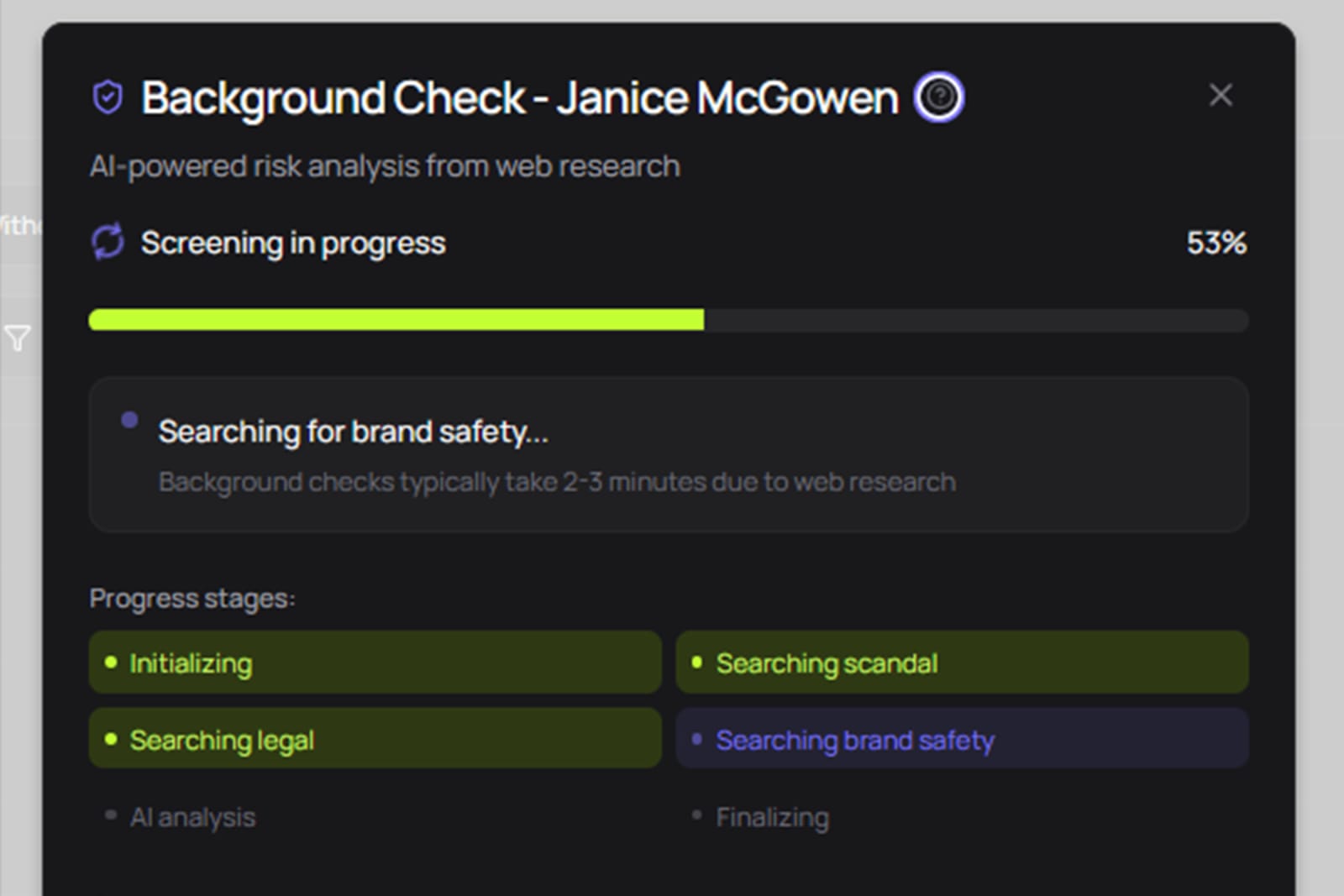 Safety Check flags missing disclosures before posts go live — AANA compliance without a legal review.
We’ve baked this into the platform. Every piece of content submitted for approval runs through an AI Safety Check that flags missing disclosure tags, problematic claims, and compliance risks before the brand ever sees the post. It’s one fewer thing for your legal team to spot-check.
Step 5 — Don’t fake the human
The tempting shortcut in a tight budget cycle is to use AI to manufacture creator-style content — synthetic faces, AI voiceovers, “virtual influencers.” We’ve watched brands try, and watched it fail in public. Coca-Cola’s AI-generated 2024 Christmas ad drew immediate backlash for feeling soulless. Klaviyo’s 2025 work found a thirty-two percent drop in trust when audiences detect AI in brand content.
If you want creator-style content, hire creators. If you want to use AI in the workflow — drafting captions, generating B-roll, automating reporting — that’s defensible, but disclose it, and don’t put it near the creator’s actual face or voice. Audiences are reading sincerity, and AI is the absence of sincerity.
Why Micro-Influencers Are Structurally More Authentic
The whole playbook above is easier with micro-influencers, and the reasons are structural, not stylistic.
A creator with 3,000 followers on TikTok isn’t shooting in a studio — they’re shooting on a phone in their kitchen, because that’s the only setup they have. The “authentic look” isn’t a strategic choice; it’s the only option. Macro-influencers with 500K+ followers have studios, lighting kits, and editors — and the moment they use them, the polish is detectable. A 5,000-follower creator’s audience reads their content as recommendation from someone in the community; a 5,000,000-follower celebrity’s audience reads it as endorsement. Same product, same words, very different psychological response.
The data backs it up. Beichert and colleagues (Journal of Marketing, 2024) — covering €17M in revenue across 2,808 Instagram discount codes and 1,698 influencers — found nano-creators (around 1,000 followers) generate roughly five times more revenue per follower than macros and around twenty times the ROI on a typical $50 promotional post. Engagement rates at micro tier sit between three and eight percent; at macro tier they fall under one percent on average.
The full thesis is in our blanket campaign post, but for authenticity specifically, the maths is simple: the smaller the creator, the harder it is for them to not produce authentic content. They don’t have the gear to fake it. Run that across fifty creators in a single campaign and you get fifty unscripted angles on the same product, all in different bedrooms and kitchens and gym bags, each wrapped in the voice of a creator their audience already trusts.
Bottom Line
Authentic creator content is no longer a stylistic preference — it’s the only kind of influencer content that consistently survives modern audience scrutiny. AI saturation, regulatory enforcement and Gen Z’s pattern-matching speed have made the cost of getting it wrong much higher in 2026 than it was even twelve months ago.
The fix isn’t complicated. Pick creators whose voice already fits. Brief on guardrails, not scripts. Try uninstructed seeding before paid posts. Disclose properly. Don’t fake the human. And run the campaign across enough small creators that the structure of micro-influencing does most of the authenticity work for you.
Where this fits in our pillar
This piece is part of our pillar guide on scaling micro-influencer campaigns — covering creator volume, workflow, measurement, and brand-safety end to end. For the full playbook, start with the complete guide.
If you want that playbook on autopilot — verified creators, an AI Brief Builder that writes for creative latitude, Safety Check that catches disclosure issues before they’re public, and a fixed-rate model that takes the negotiation theatre out of every campaign — that’s what we built. Have a look at how it works.
Ready to get started?
Launch your first campaign or join as a creator today.